

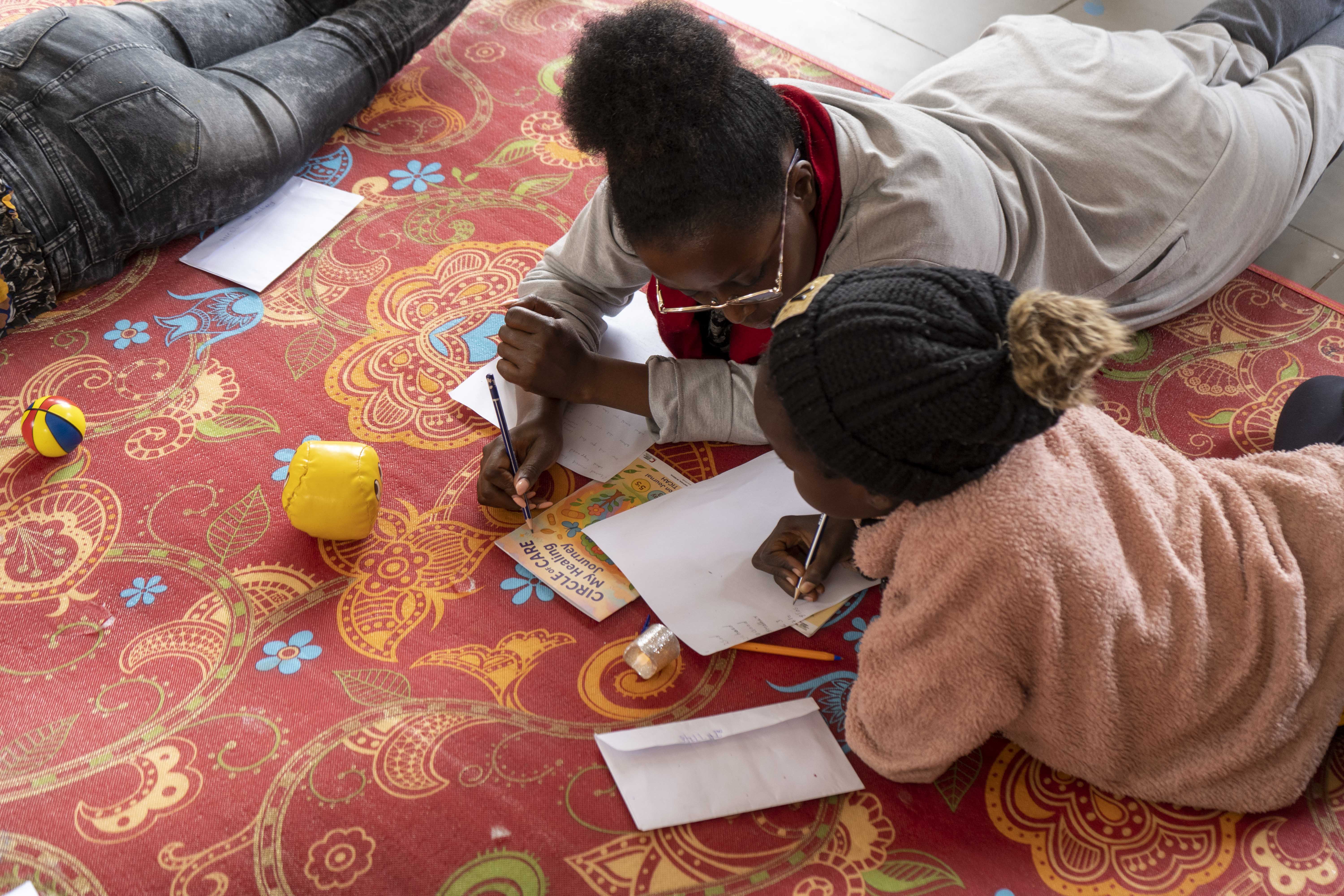
“TICAH has really opened my eyes to the fact that I am never alone. I was in a lot of pain and, for a long time, I didn't know what to do with it. But now I understand what I am going through better, and I can look forward to a brighter future.
The body mapping sessions gave me a safe space to express what I was going through and also helped me see that other people are going through their own experiences. The facilitators shared their stories with us too. Seeing how far they have come made me feel positive about how far I can also go.” Anonymous participant
Her words capture why this work matters to us.
Across Kenya, violence continues to affect far too many women, girls and children. Behind every statistic is a person trying to make sense of what happened to them, sometimes while still living in the same home or community where the violence happened.
So what does support really look like after violence?
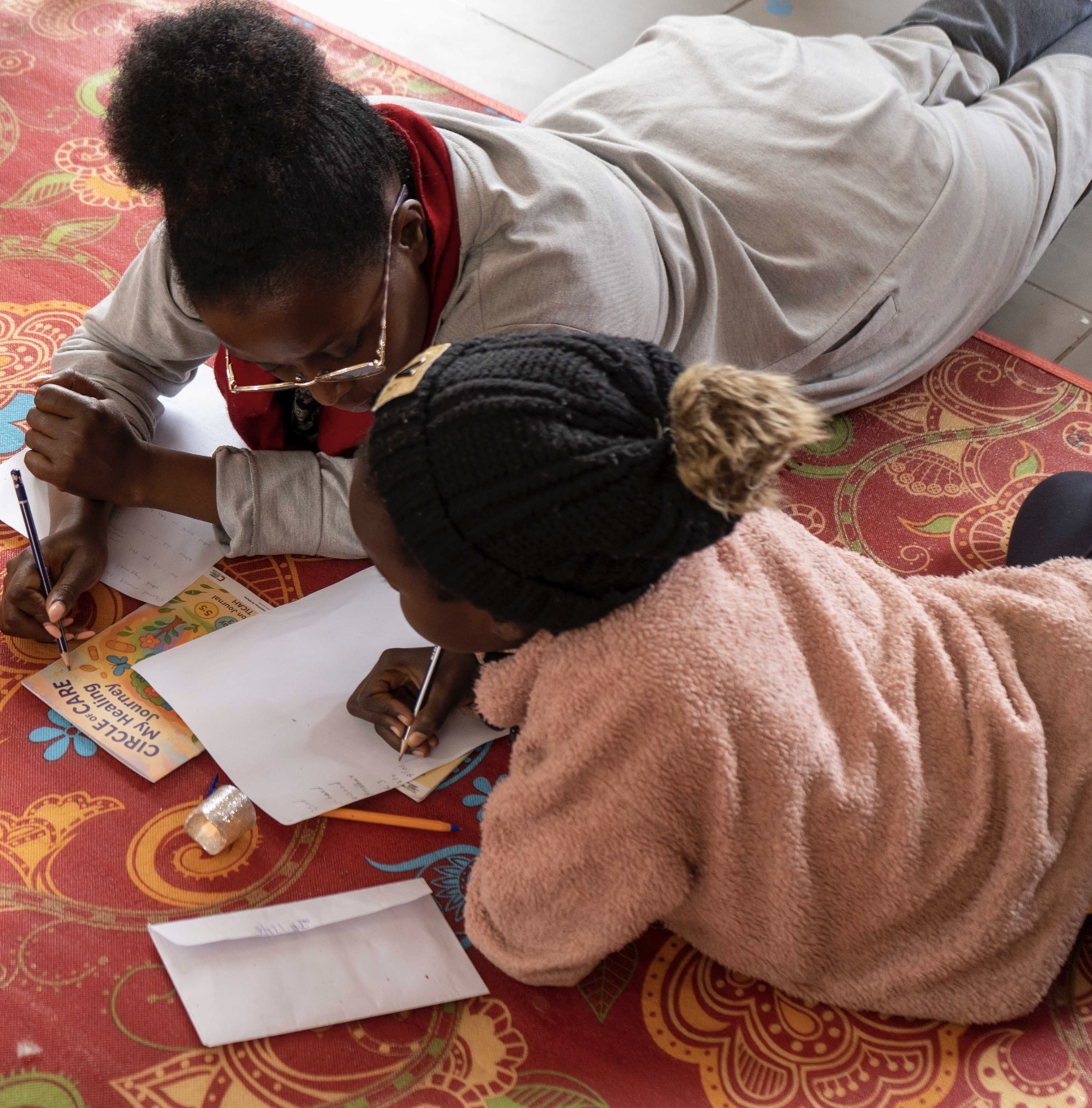
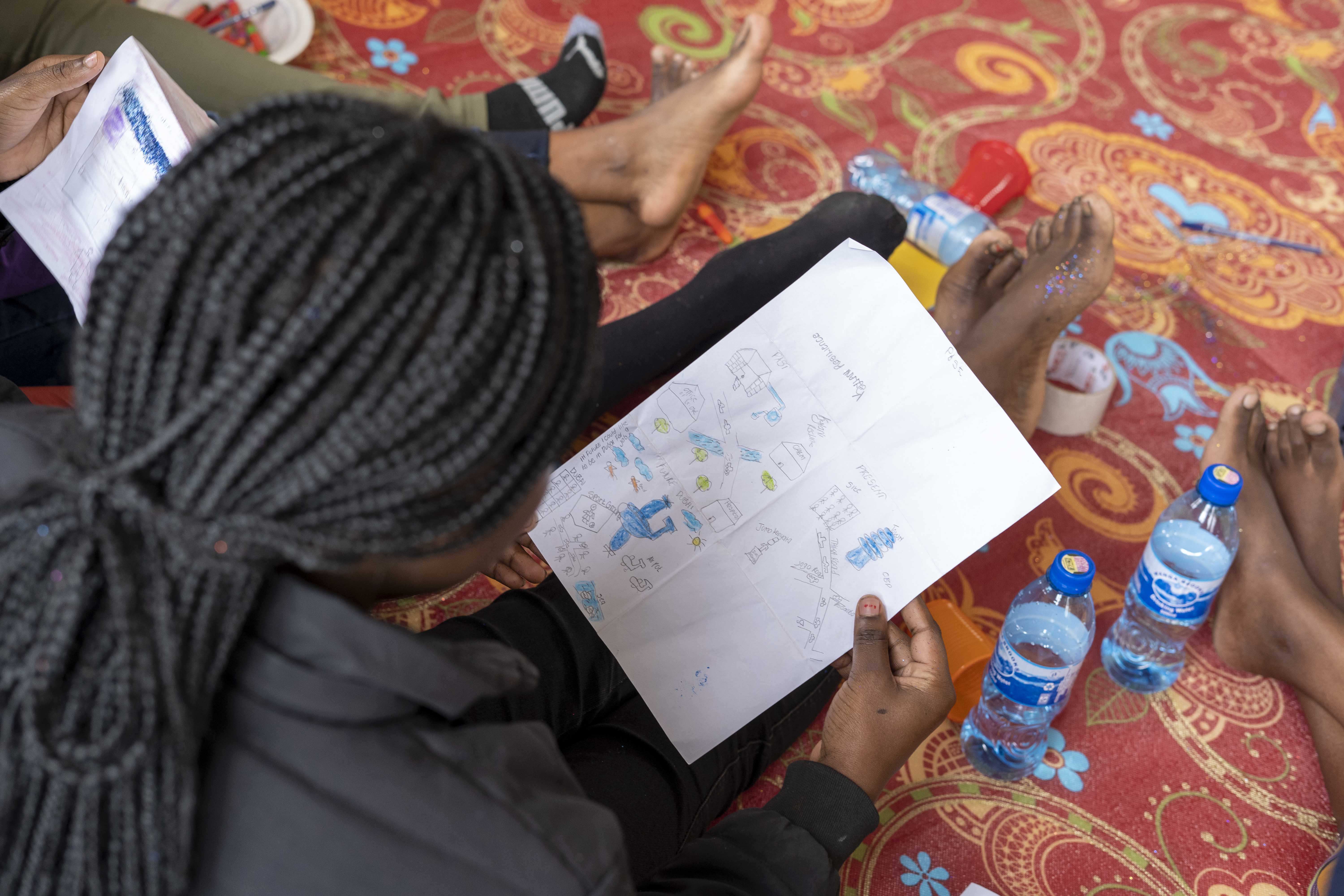
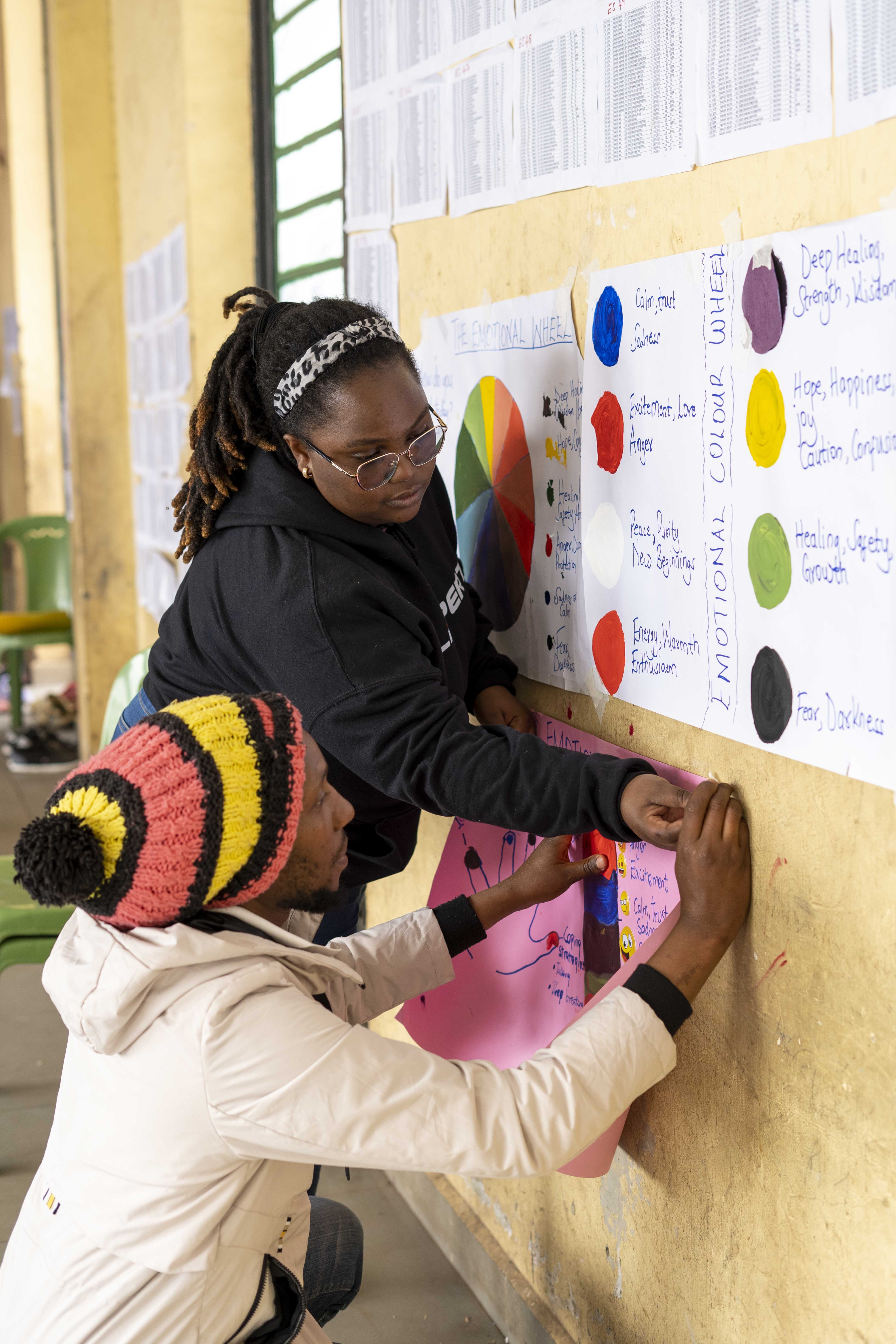
One of the approaches we use is body mapping, an art-based, trauma-informed mental health and psychosocial support (MHPSS) approach that creates a safe space for people to explore and express experiences that may be difficult to put into words. Through drawing, colour, symbols and storytelling, participants can reflect on their emotions, experiences and healing in a way that feels personal and supported.
Talking about pain is not always easy. There may be fear of being judged, not being believed, or simply not knowing how to put an experience into words. Body mapping offers another way to begin. Body Mapping is a creative process in which participants paint life-sized self-portraits to explore and express their experiences, identities, and personal stories.
Through art, colour, storytelling, and conversation, participants can express what they are carrying, understand some of what they are feeling, and begin to see themselves beyond what has happened to them.
But creating a space where someone can open up also comes with responsibility.
We have a counsellor on board to provide psychosocial support and follow up with participants and within the community when further support is needed. For us, the work cannot end when the body mapping session ends. We have to think about what happens when someone leaves that room and goes back home.
We see the same thing in our conversations with young mothers.
A conversation may begin with contraception and become a conversation about a relationship. A discussion about parenting can bring up someone's own childhood. A conversation about mental wellbeing may be the first time someone feels safe enough to talk about violence.
And slowly, we see change.
A young woman realises she is not alone. A child becomes more confident about saying when something is wrong. Someone learns where to go for help. A caregiver starts questioning a parenting practice they had always considered normal.
Our work cannot stop with the survivor.
We work with schools on safeguarding and peer-to-peer learning. We have conversations with caregivers about nurturing care. Through chief barazas and community dialogues, we bring these conversations into the spaces where people live, raise their children and make decisions together.
We are seeing the impact. 87% of children demonstrated greater agency to recognise and respond to violence. For us, that is significant because it goes beyond simply knowing what violence is. It means children are becoming more confident in recognising when something is wrong, understanding that they have a right to be safe, and knowing when and where to seek help.
We are also seeing those conversations move beyond the children themselves. Families are talking more openly about care and protection, while communities are beginning to understand that keeping children safe is not the responsibility of one person, but something we all have a role in.
And when a child does speak up, the support cannot end with disclosure. Children and caregivers continue to receive psychosocial support, with those who need additional help referred for further services, including legal and medical care.
Because ultimately, the question is not simply, how many children did we reach? It is: Are children better able to recognise violence, respond to it and seek support when they need it?
For 87% of the children we worked with, we are beginning to see that answer become yes.
There is still a lot of work to do.
Stigma still keeps people silent. Sustained psychosocial support can be difficult to access. And schools, health facilities, families and community structures do not always connect as well as they need to.
So we keep asking: Did the person actually get the support they needed? Are they safer? Is someone following up? What needs to change around them so that the violence does not continue?
And sometimes, the answer to why we keep doing this work comes from the people in these spaces themselves:
“Before, I was scared to talk about what I was going through because I thought people would judge me. Being in these sessions and listening to other people made me realise that I have a voice too. I know now that when something doesn't feel right, I can speak up. I feel stronger, and I know there are people I can reach out to when I need help.” Anonymous
That is the change we want to keep building on.
As we head to #SVRIForum2026, we are carrying these voices and lessons with us. We want to keep creating spaces where survivors feel safe enough to speak, where they are believed when they do, and where support does not end with a referral.
Because healing may begin in a safe space, but real change happens when the home, school and community someone returns to becomes safer too.